
A project may stay within the initial budget and yet generate high costs after completion. The difference often stems from decisions made as early as the design phase: which materials are chosen, how the building envelope is configured, what building systems are installed, how easy the equipment is to maintain, and how easily the building can be adapted over time.
A building may look great upon handover but, at the same time, become costly to operate if operation and maintenance were not considered from the design phase onward. Therefore, the value of a solution should not be assessed solely by the cost required to build it, but also by how it will function over time.
Some of the most important decisions are made before construction begins
The early stages of design provide an opportunity to compare alternatives before finalizing them. Different materials, system configurations, building envelope solutions, building orientation, or equipment with different characteristics can be analyzed.
At this stage, energy performance simulations can be conducted, the life cycle of materials can be analyzed, and the building’s orientation, volume, and envelope can be optimized before details are developed.
The earlier these aspects are evaluated, the more room there is to adjust solutions before changes affect the final documentation or construction.
The lowest price does not always mean the lowest cost
Two solutions can serve the same function yet have different economic impacts over time. A lower-priced material may reduce the initial investment but may require more frequent maintenance or replacement sooner.
An article published by Autodesk on evaluating and comparing design solutions even provides the example of a cheaper material that reduces the initial cost but may subsequently result in higher maintenance expenses. In contrast, a solution that is more expensive at the outset may prove more cost-effective if it has a longer lifespan and requires fewer maintenance interventions.
The same principle applies to installations, facades, roofing systems, and technical equipment. In design, the acquisition cost can be weighed against the service life, energy consumption, maintenance requirements, and long-term effects.
Performance can be verified before the solution is implemented
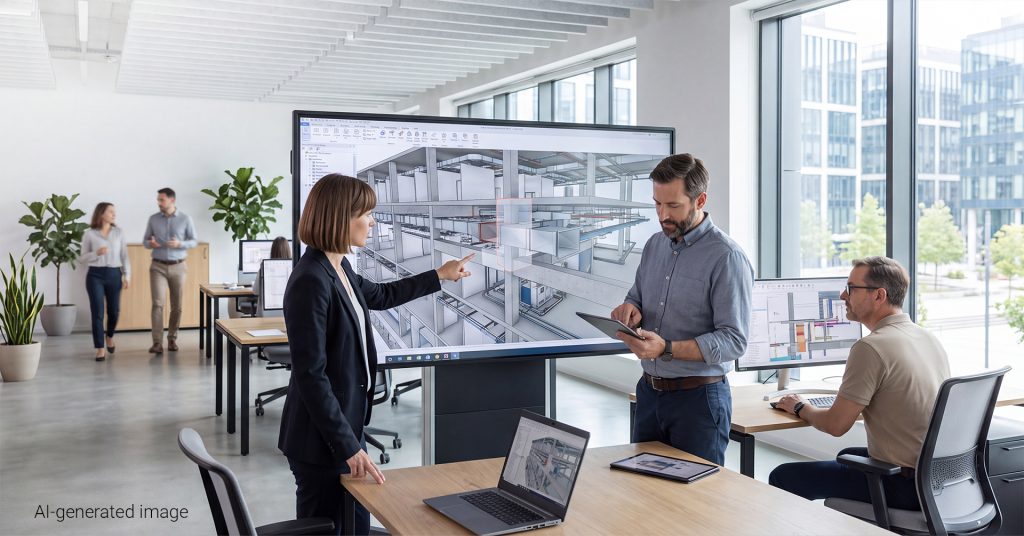
Digital tools allow for the analysis of certain effects before the relevant elements physically exist. BIM models can consolidate information about technical solutions and quantities and support coordination among disciplines. At the same time, simulations can validate different options as early as the design phase.
For complex buildings, seasonal variations and thermodynamic behavior can also be analyzed in relation to the equipment to be installed. Thus, the decision is not limited to the question “How much does this solution cost?” but can also include how it will influence the building’s performance after completion.
Maintenance Begins with the Design Phase
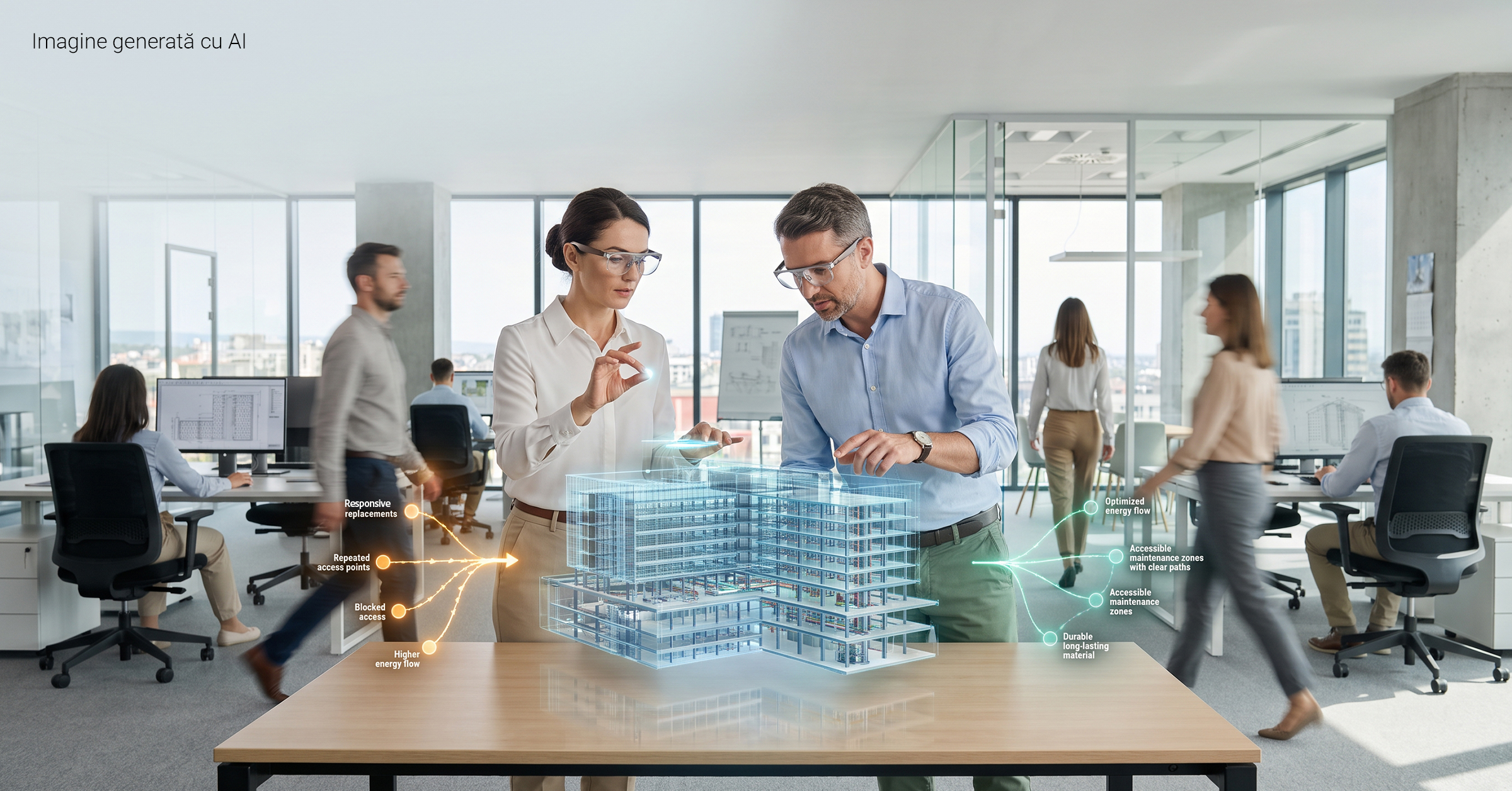
How equipment is laid out, how accessible it is, the space available for maintenance, and the ability to replace components can simplify or complicate post-commissioning operations.
An article published in the CIBSE Journal shows that building systems must be designed not only to function properly, but also to be maintained efficiently. Access to equipment, the lifespan of materials, and the implications of future maintenance can be analyzed even before construction begins.
In complex projects, the possibility that certain equipment may change before or after the project is completed must also be considered. The ability of spaces and systems to integrate new features can be considered as early as the design phase.
Those who will use the building can contribute to its design
Some challenges only become apparent when a building needs to be operated or maintained. That is precisely why the experience of those familiar with these processes can be leveraged before the building is constructed.
According to an article published by FacilitiesNet, involving operations and maintenance staff as early as the project development phase can help identify practical issues—such as access to equipment, service calls, or maintenance requirements—well in advance.
In complex buildings, the same logic applies to the requirements of building owners and occupants, which can be tracked and integrated throughout the project’s development.
A building must be evaluated beyond its construction cost
The initial budget remains essential, but it cannot be the sole criterion for choosing a solution. Energy consumption, material lifespan, maintenance, repairs, equipment replacement, and the possibility of future adaptations are all part of the costs associated with a building over time.
Therefore, designing for a building’s entire lifespan means analyzing not only the costs of a solution from the beginning, but also its later effects. A building that is inexpensive to construct is not necessarily cost-effective in the long run.