
Voce generată cu AI.
In a construction project, architecture, structural engineering, and building systems do not operate in isolation. Every decision made in one discipline can influence the others. When information is not shared promptly, problems end up being discovered directly on the construction site—at which point correcting them is more difficult and more costly.
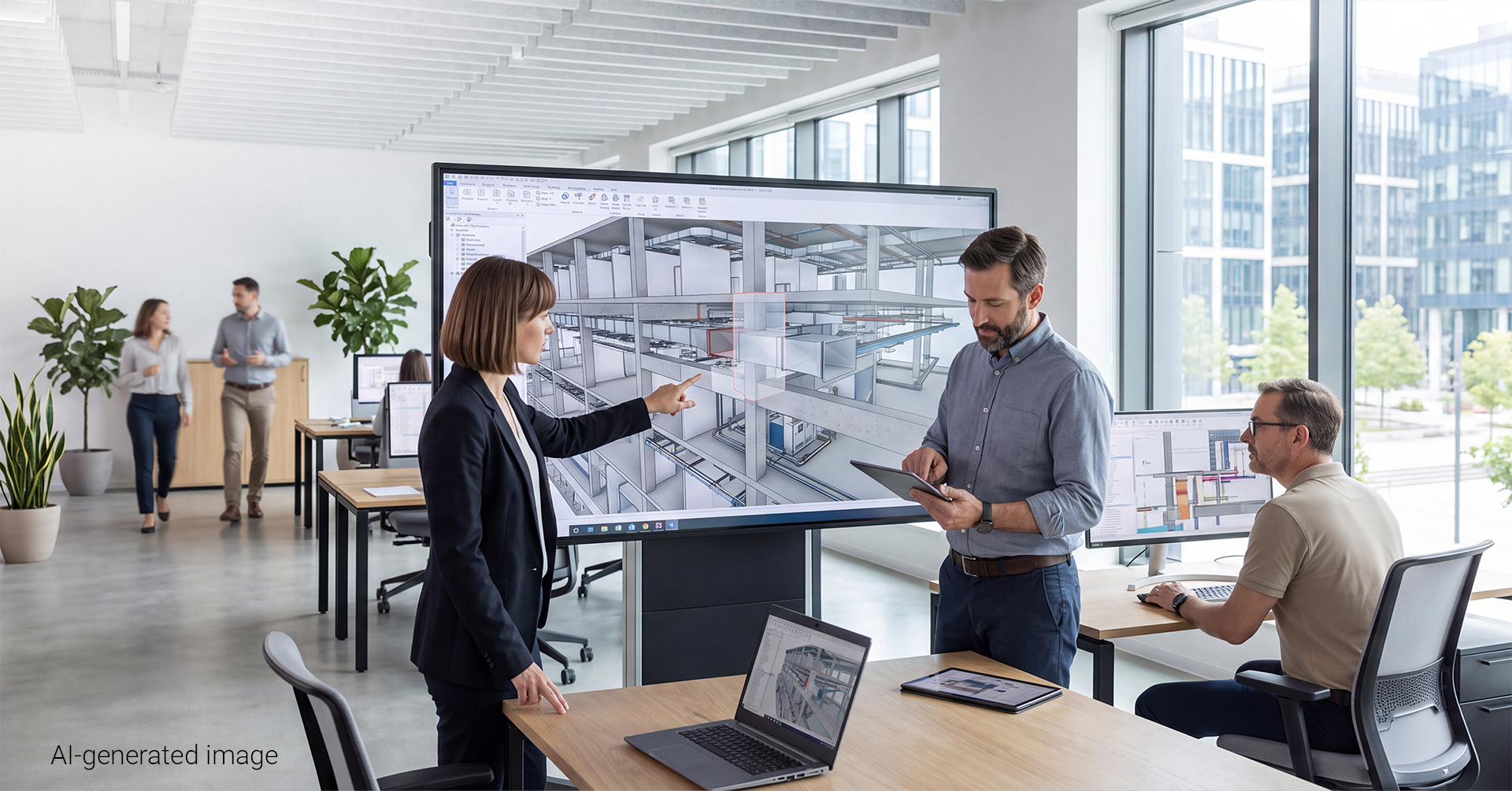
Integrated design is based precisely on the idea that all disciplines must collaborate from the very earliest stages of the project. Architects, structural engineers, and MEP engineers work in a shared digital environment, contributing to the same model and pursuing a common goal, rather than successively passing along documentation developed separately.
The same building, viewed simultaneously from multiple perspectives
A project may appear sound when each discipline is analyzed separately, yet contain conflicts when all solutions are overlaid.
For example, a pipe run may intersect a beam, equipment may occupy space needed for another system, or an architectural solution may require structural modifications. In an integrated process, such situations can be identified in the digital model before construction begins. BIM allows disciplines to work on the same model and detect conflicts between architecture, structure, and MEP systems early on.
Problems are solved when changes are still easy to make
One of the most important advantages of integrated design is shifting a significant portion of the verification process from the construction site to the design phase.
Digital models can be periodically verified for accuracy, completeness, and interdisciplinary coordination. Thus, a conflict between a pipe and a beam—or a change that hasn’t been communicated to all disciplines—can be identified before it affects construction.
The same principle applies when the project changes. A change in the function of space can simultaneously affect the architecture, systems, quantities, and costs. When information is integrated into a common model, the impact of the change can be tracked and evaluated in a coordinated manner, rather than each team updating its own documents separately.
Integrated design is also about collaboration, not just technology
A high-performance digital model cannot solve all problems on its own. Integrated design requires specialists to communicate constantly, make decisions based on the same information, and incorporate the experience gained during construction.
On-site experience can be leveraged in the design process: designers analyze challenges encountered during construction. They can lead to improvements in construction details, work standards, and solutions used in future projects.
Essentially, integrated design means less fragmented information and more decisions made collaboratively before construction begins. The result is a more coherent project, with fewer inconsistencies to resolve on-site and a higher level of predictability for all teams involved.