
In an interview with DefenseRomania, Leviatan Design’s Cătălin Podaru talked about the defence industry workforce, the adoption of technology to automate procedures, but also about the challenges faced by the defence industry which is indeed a niche sector, but quite important to Romania’s security.
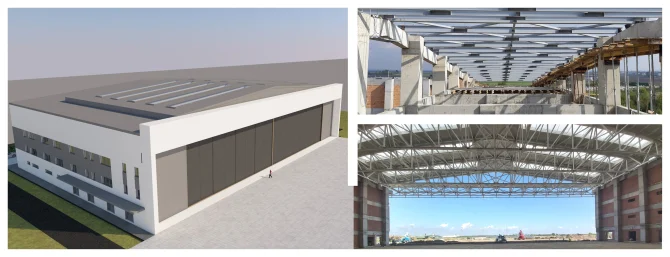
Leviatan Design is involved in very large military infrastructure projects (Sibiu – South-East Multinational Corps Command), but also in operational infrastructure projects (Câmpia Turzii Air Base “General Emanoil Ionescu” No. 71)
The CEO of Leviatan Design referred to one of the biggest problems that the national defence industry (private or state-owned) is supposed to face: the workforce.
“The fact that manpower is an issue for any position in a company means that we need to think about the human resources in the highest terms. Technology makes work easier. We want to make work more enjoyable and easier, that is exactly why we use software. But the methodologies, processes and co-workers are also as many elements that make work easier. (…) The value attached to our people, engineers and architects whom we have hired to do the job are the ones really adding value and not on the procedural side of the repetitive tasks”, Mr. Cătălin Podaru told DefenseRomania.
Using technology as a business enabler for companies and personnel working in the defence industry
Leviatan Design’s CEO also spoke about how important technology is for the defence industry. And he used the example of the military infrastructure, since his company is a military contractor too. Technology comes with great benefits but unfortunately not so many companies see the benefits of technology.
“What we actually do is walk the client through the technical designs. And we’re not talking about a simple presentation, but about enabling a client to explore the designed spaces and structures, however complex they might be, before they are actually built up, so that clients can check on the requirements, such as the gauge, the specifications, etc. And this is very important because communication, understanding, technical and engineering lingo often hide barriers and bottlenecks that you are only running into when you start building. We have implemented highly-advanced augmented-reality technology into the construction industry, into design activities and on construction sites. Basically, engineers and the client can make a virtual visit on the construction site and get immersed – through the 3D models – into whatever will be built in those areas, see coordination issues, positioning problems, miscalibration, and all of that in a dynamic manner.
And speaking about human resources, we were pleasantly surprised to see college students wishing to visit us for internships. So, we walked them through all phases of the process, without assigning any professional tasks to them. When they saw that the construction business is no longer about papers and drawing boards, but also about tablets, interconnection, and 3D modelling that people can analyse with variations, and mixed reality, they were surprised, because they thought everything was like it used to be 100 years ago”, said Cătălin Podaru.
“There is a huge shortage of engineers in Romania. The ones we do have often get their jobs in other industries. After graduating from the civil engineering and systems faculty, they become programmers, although our industry is really rewarding“, concluded Leviatan Design’s CEO.