

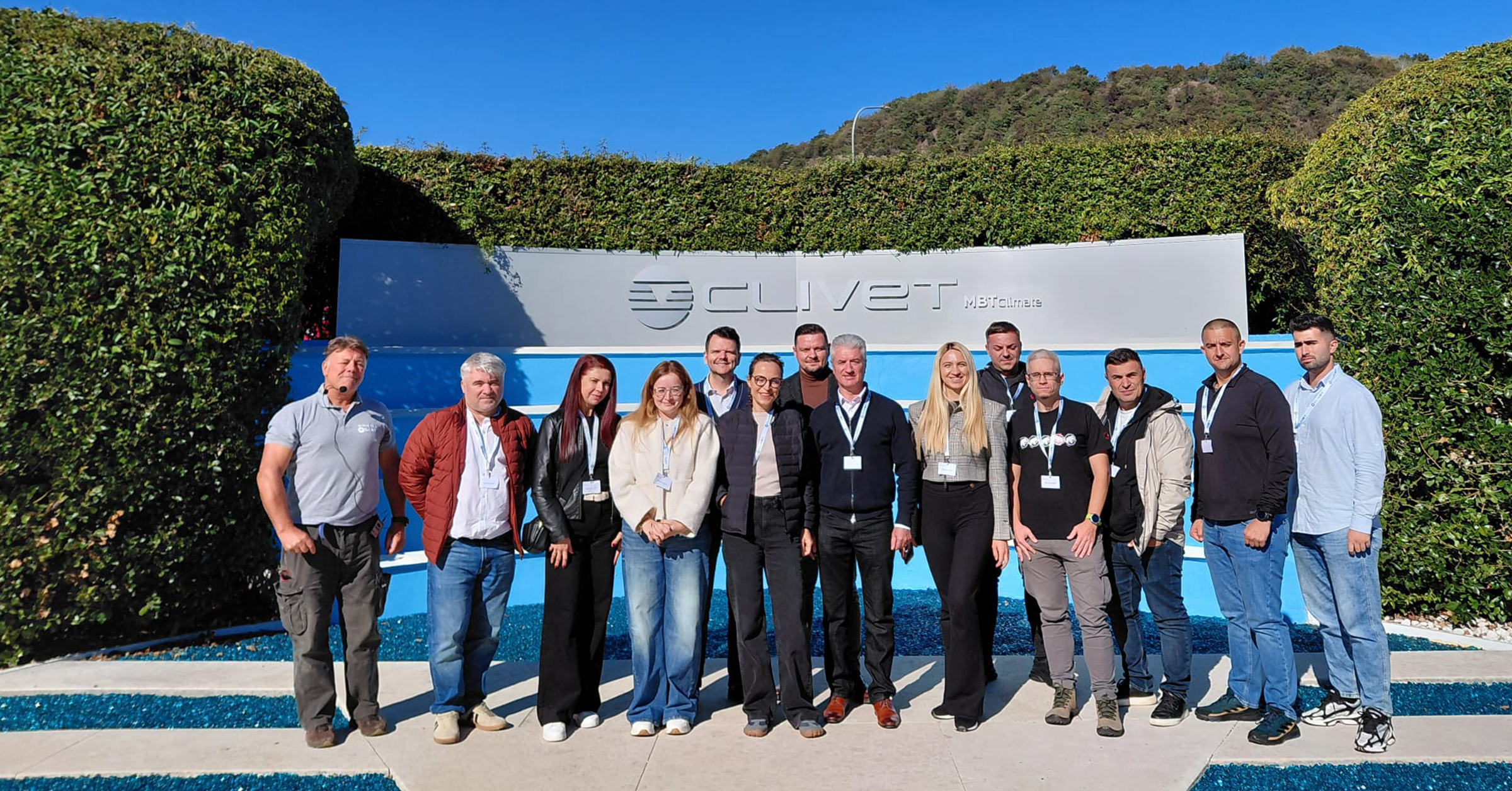

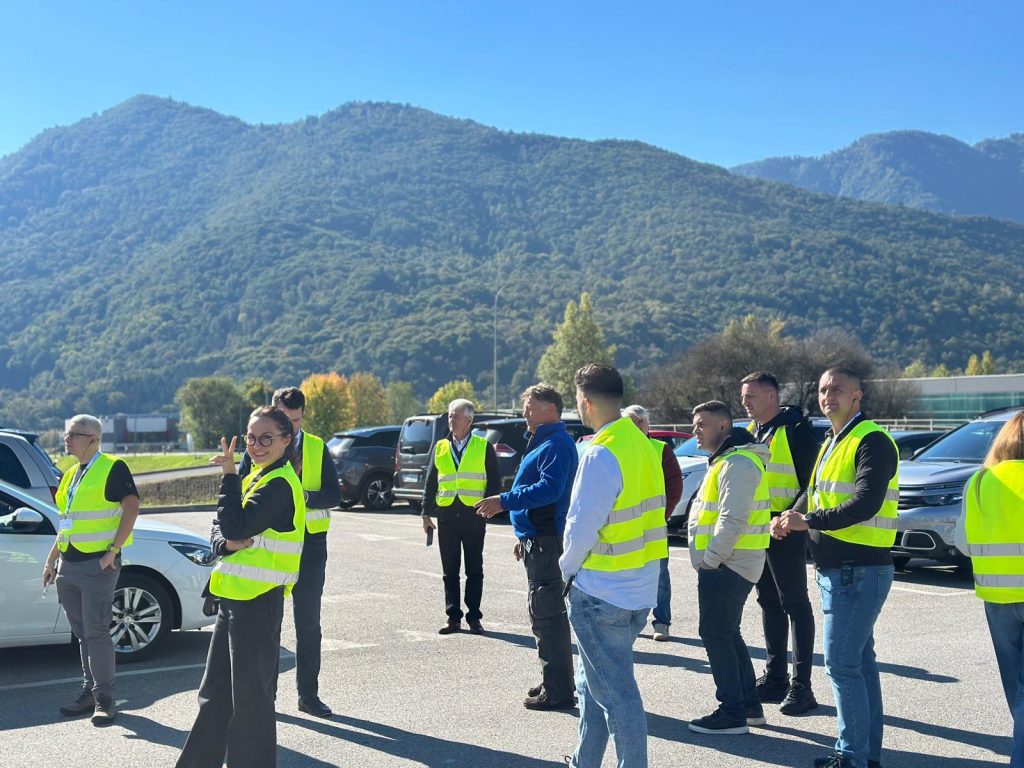
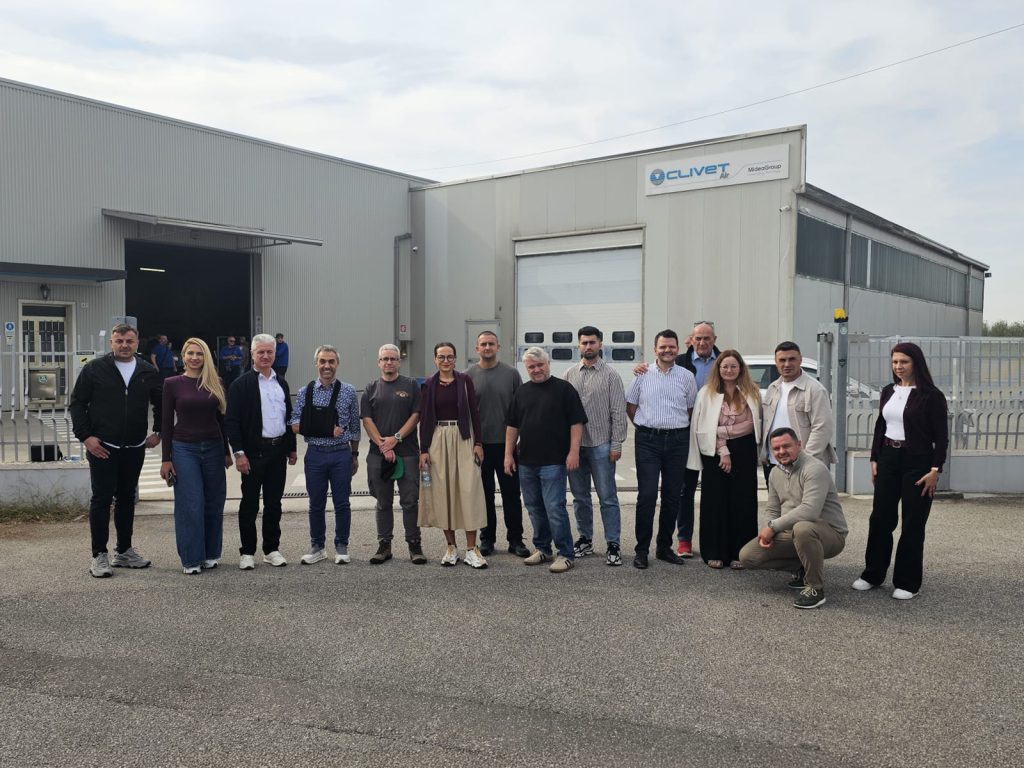
Between October 14–15, 2026, at Clivet’s invitation, Alin, an HVAC Design Engineer on the Leviatan Design team, joined a visit to Italy to tour Clivet’s production facilities in Feltre and Isola della Scala. The program aimed to analyze technologies, design solutions, and manufacturing processes for heating, ventilation, and air conditioning equipment.
The visit provided an opportunity to exchange experiences with the manufacturer and to analyze the equipment from a designer’s perspective. Manufacturing specifics, quality control criteria, and configuration options complemented the discussion of technical performance and integrating solutions into building systems.
Founded in Feltre in 1989 by Bruno Bellò, Clivet began operations by manufacturing chillers and heat pumps equipped with scroll compressors and high-efficiency heat exchangers. The two factories featured in the program showcased complementary aspects of the company’s operations: the production of heating and cooling systems and ventilation and air treatment, respectively.
Feltre: Heating and Cooling Solutions
The Feltre facility, the company’s historic headquarters, manufactures heat pumps, chillers, and air-conditioning equipment for commercial and industrial applications. The development of low-environmental-impact solutions, including the natural refrigerant R290 (propane)—was one of the visit’s highlights.
The technical analysis focused on refrigeration circuit design, the integration of hydraulic and electrical components, and the role of automation systems. Manufacturing processes and equipment testing methods rounded out the overview of available solutions and the criteria for selecting them.
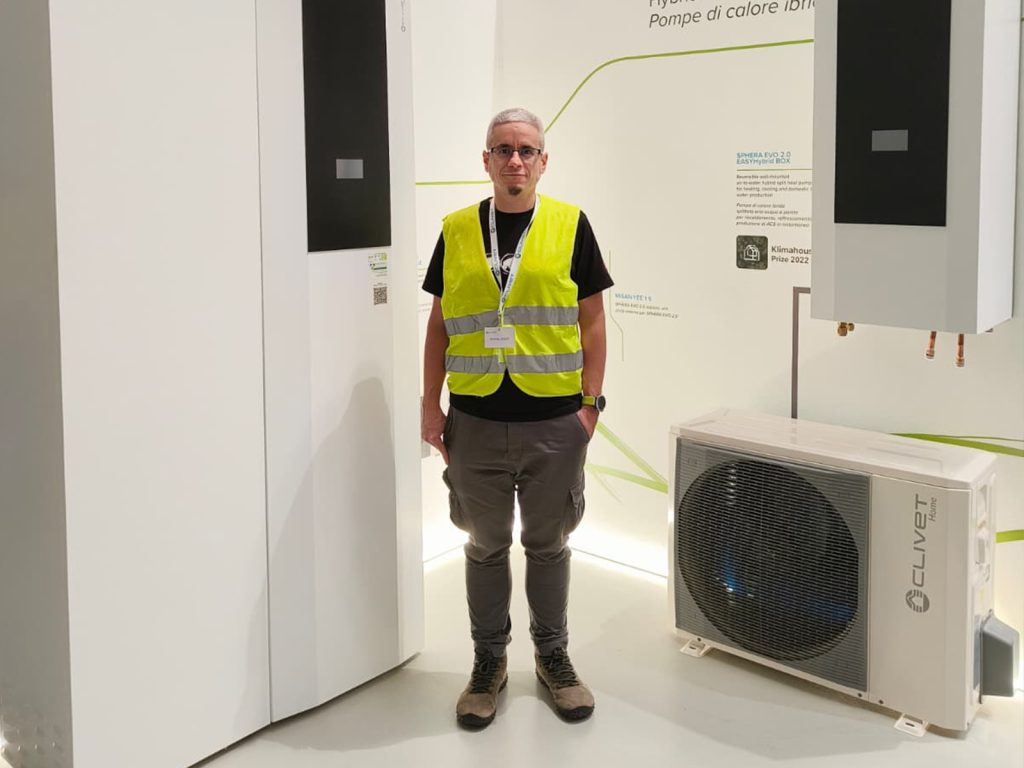
From a design perspective, attention has focused on heat pump performance at low outdoor temperatures, the ability to achieve high heat transfer fluid temperatures, and cascade operation. Integrating this equipment into centralized heating and cooling systems is relevant for buildings with high energy demands, such as hospitals, administrative buildings, and industrial facilities.
A key aspect of the evaluation is the equipment’s performance under the project’s operating conditions, including at partial loads. The site visit provided context for assessing the design and functional characteristics against these selection criteria.
Isola della Scala, Customized Configurations for Air Handling
At the Clivet Air plant in Isola della Scala, the program focused on air handling units (AHUs) and their configuration options based on the spaces they serve. The modular design allows for the integration of filtration stages, heating and cooling coils, heat recovery units, fans, and automation systems.
Attention was paid to the mechanical and thermal characteristics of the housings, airtightness, air leakage minimization, and energy recovery. Access to components for inspection, cleaning, and maintenance rounded out the operational analysis of the equipment.
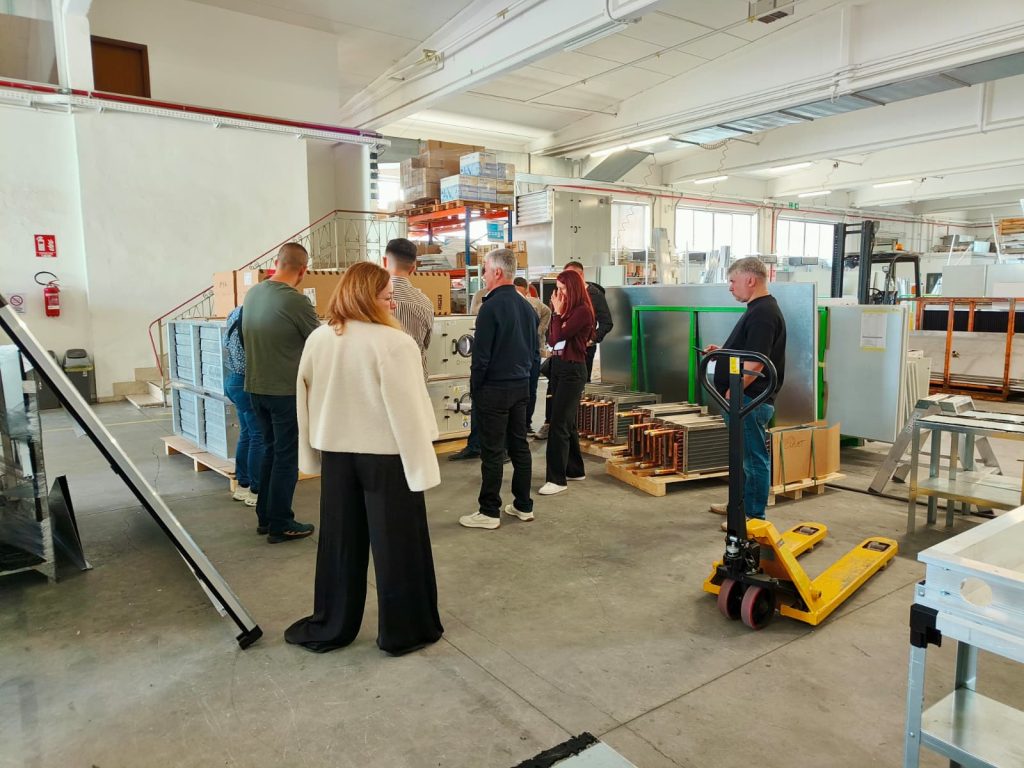
In hospital projects, particular interest has focused on structural configurations adapted to the hygiene requirements of the spaces they serve. Selecting appropriate materials and interior surfaces, integrating high-performance filtration systems, and precisely controlling air parameters are key factors when evaluating air handling units for these facilities.
For operating rooms, intensive care units, and isolation rooms, high asepsis standards require careful verification of the equipment’s compliance with applicable regulatory requirements. This evaluation must address air quality, pressure differentials between spaces, and the prevention of cross-contamination. The configuration options analyzed at Isola della Scala were therefore relevant for aligning design solutions with the specific requirements of each category of medical space.
Technical Dialogue to Support Design Decisions
The visit to the two Clivet facilities brought together complementary perspectives on HVAC systems. Exposure to the production environment and exchanging expertise with Clivet specialists enriched Alin’s understanding of HVAC solutions and how they meet the requirements of complex projects.
The design and functional features discussed during the visit serve as useful benchmarks for developing technical solutions in Leviatan Design projects, particularly for hospital facilities, where reliability, operational continuity, and maintaining microclimate parameters are essential. The visit reinforced this connection between the equipment’s characteristics and the specific requirements of the building into which it will be integrated.
The Leviatan Design team thanks Clivet for the invitation and for the opportunity for professional dialogue created by the visit to the two production facilities.